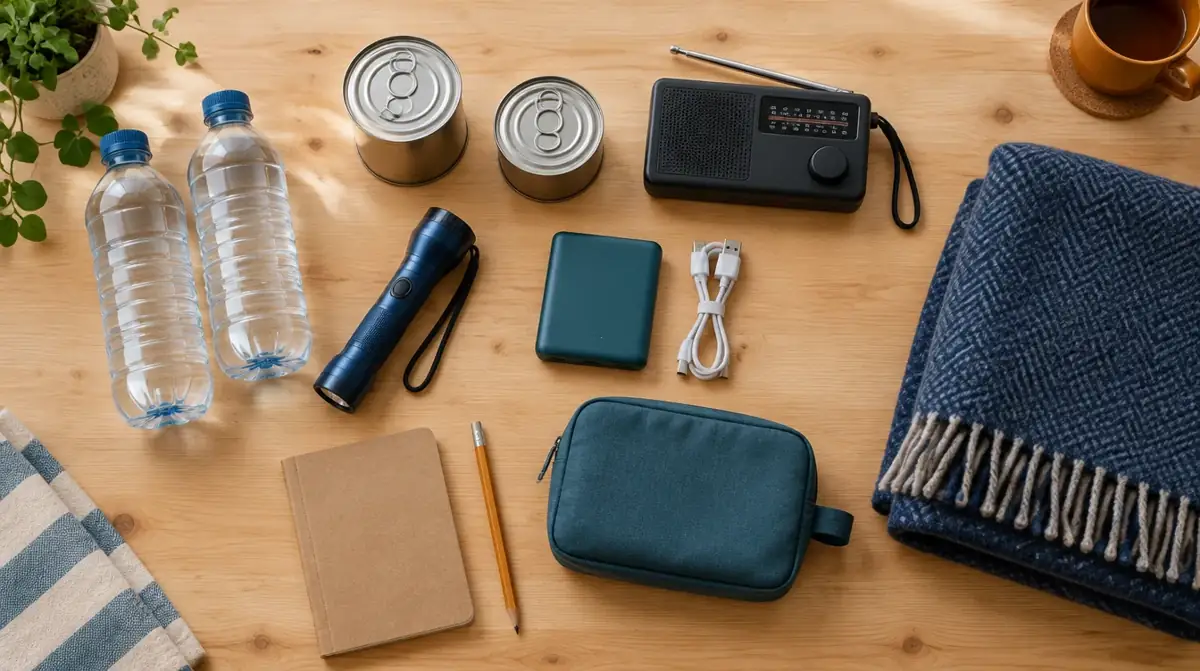
You can own a cupboard full of supplies and still have a gap at dinner time. Can you open the tins? Does the food need cooking? Can the person who needs the torch reach it?
Those questions matter more than a photograph of an impressive kit. This guide helps you check what is already useful, adapt it to your household and make a shorter list of what to do next.
Plan for your first three days at home.
The government’s Be Ready checklist uses three days as a preparation starting point. It is not a prediction that every disruption ends after 72 hours.
Think about interrupted power, water, shopping or communications. For this page, the kit is for managing at home; it is not an evacuation bag. If officials tell you to leave, follow their instructions rather than staying because you have supplies.
Write down who the kit is for, including dietary needs, access arrangements and animals. Then ask which ordinary routines would become difficult. The same box will not suit a person living alone and a household with a baby and two dogs.
Water takes more planning than a spare packet of pasta.
Be Ready recommends three litres per person per day for drinking, with more needed for cooking and washing. For two adults over three days, the drinking-water starting calculation is 2 × 3 × 3 = 18 litres. That example does not include pets or other uses, or individual needs that change the amount.
Look at where that supply can be stored safely and reached. Follow the container’s storage instructions. A water filter is not the same as a stored drinking supply, and should not be assumed to make any available water safe.
Write “drinking” and “other uses” separately on your planning sheet. It makes the gaps easier to see than one unexplained total.
Could you make a familiar meal without the cooker?
Start with food you normally eat and can safely use without refrigeration or cooking. Check the label, allergies and dietary needs; keep the right opener with it.
For a planning exercise, pick one breakfast and one main meal from your own cupboard. Check every item: does it need hot water, heating, washing or a utensil? This is a way to spot dependencies, not a nutritionally complete three-day menu.
| What you found | Question to ask | Planning decision |
|---|---|---|
| Dry pasta or rice | What water and heat does it need? | Do not count it as a no-cook meal. |
| A tin or pouch | Is it labelled ready to eat, and can you open it? | Check suitability and storage instructions. |
| A favourite snack | Does it fit everyone’s dietary needs? | Plan around the actual people eating it. |
For food already in a fridge or freezer during an outage, use the separate power-cut food-safety guidance. A stocked freezer is not a replacement for a no-cook option.
Cover the ordinary needs before specialist extras.
Ready Scotland’s home-kit guidance includes light, information, charging, hygiene, warmth, documents and supplies for people’s specific needs. Use that as a prompt to review your own routines.
- Can you find it? A working torch stored within reach is more useful than one nobody can locate.
- Can you use it? Check the batteries, cable or opener that goes with an item.
- Does it fit your life? Consider spare glasses, hearing-device supplies, baby products, pet needs and accessible written information where relevant.
- Does it need specialist planning? Ask the relevant provider about essential powered equipment or medical supplies. Do not assume an ordinary power bank is suitable for medical equipment.
A device earns a place by solving a specific gap. This guide does not require a generator, solar panel, specialist radio system or expensive “survival” package.
A small flat and a tight budget are planning constraints.
Start with a stocktake and the free actions: organise what you own, write contacts down, check instructions and agree where supplies live. A gap list can include an arrangement to make, not just a purchase.
If you can buy something later, prioritise a gap you have identified. Ordinary food that fits your usual shopping may be easier to rotate than unfamiliar emergency meals. There is no universal “under £50” basket here: prices and needs vary.
Use safe, accessible storage without blocking exits or creating lifting hazards. Heavy water containers and high shelves are a poor match. Keep supplies in the conditions on their labels and don’t use a damp or hot storage spot just because it is empty.
A kit can live in more than one sensible place. The important part is that people know where things are. Keep private documents secure while making sure trusted household members know how to find the information they need.
What have you already got?
Choose a status for each area. “Have” means you have checked it for your household, not that this page has assessed whether it is enough. Choices reset on reload.
0 of 8 areas reviewed · 0 marked as a gap
Try one routine. Then update the gaps.
Try finding the torch, locating the contact card or identifying a no-cook meal while normal services are available. Don’t disconnect equipment, turn off essential services or create a risky “test blackout”.
Check dates, condition and your household’s changing needs. Replace what you use. A short review after moving home, changing care arrangements or adding a pet can be more valuable than buying another duplicate item.
Supplies answer “what have we got?” Your next question is “what have we agreed?” Read the family emergency plan guide to connect the kit to the people using it.
Sources & further reading
Practical advice checked against these sources on 5 November 2026. Follow current official instructions for an incident in your area.
- Government Be Ready: supplies, water and household needs
- Ready Scotland: making an emergency kit
- Northern Ireland: household emergency kit
UKPrepKit is an independent publisher. The government’s Be Ready campaign and the organisations linked here do not endorse this guide.
UKPrepKit · Built by Circle37 — circle37.co.uk