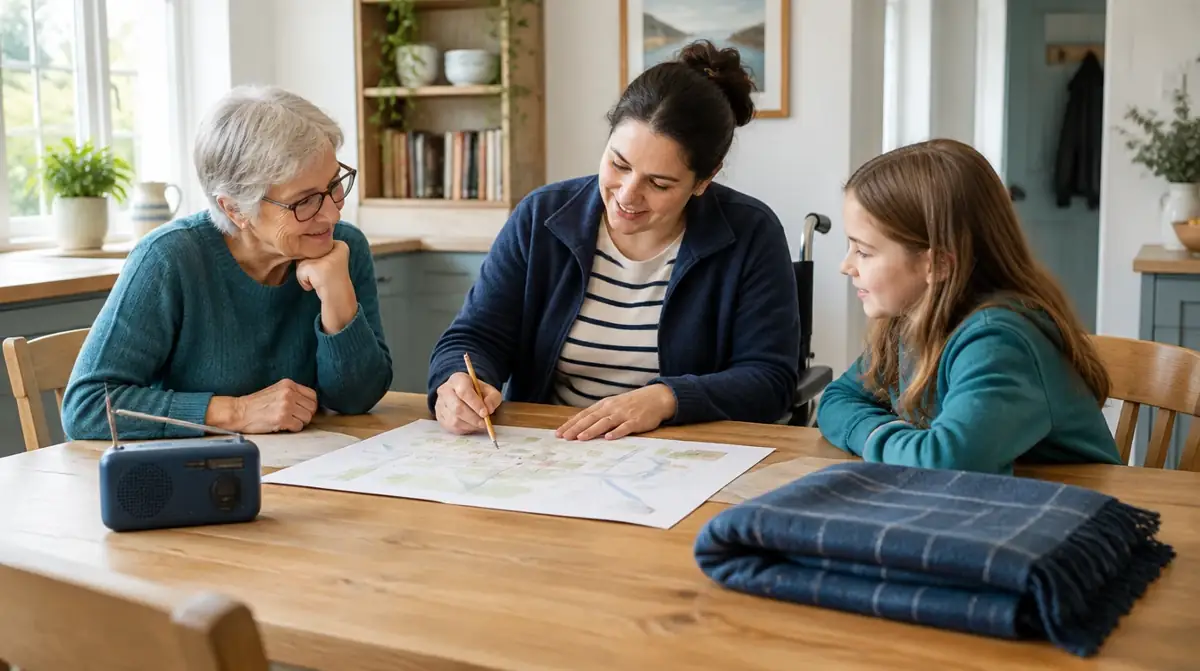
A list of emergency supplies can leave you with more questions than answers. Where would you put them? What can you afford? And what would you actually do with a cupboard full of food if the cooker stopped working?
Those are useful questions. They bring the advice back to the place it needs to work: your own home. The aim of this guide is to help you make a start you can use, rather than collect equipment you haven’t thought through.
What does Be Ready actually mean?
The government’s Be Ready campaign encourages households to prepare for disruption, with three days as a starting point. It includes practical steps you can take gradually, including some that cost nothing.
The advice covers a range of emergencies. The existence of a campaign does not, by itself, establish that a particular crisis is imminent. If you saw a worrying claim online, check it against the original source before sharing it.
Think of a familiar evening: dinner, heating, a phone call, charging a device. Which of those would become difficult if one service stopped? That is a more useful starting question than trying to predict the next headline.
Start with what your home depends on.
Then give it a second option.
Three things you can do before buying anything
Find the things you already have.
Could someone else find the torch, the right cable and the tin opener without asking you? Put useful items somewhere everyone who needs them can reach.
Agree who checks on who.
Choose a contact and a backup arrangement with the people involved. Write important numbers down. Make the plan together, rather than assuming a relative will know what you meant.
Walk through one ordinary evening.
What could you eat without your usual cooker? How would you light the room? Where would you find information? Talk it through without turning off services or equipment people rely on.
Your first list is a stocktake, not a shopping list.
Take one shelf, drawer or cupboard at a time. The example below is a planning exercise, not a required kit or a claim that these items cover everyone’s needs.
| Already have | Worth checking | Next step |
|---|---|---|
| A torch in a drawer | Does it work? Who can reach it? | Test it and agree its home. |
| Food in the cupboard | Does it need water, heat or a special opener? | Identify a familiar no-cook meal. |
| A charged power bank | Is the right cable with it? | Keep them together. |
| Numbers in a phone | Can you find them if the battery is flat? | Make a paper contact card. |
Only then write a short gap list. Put items your household relies on ahead of specialist extras. If you are comparing purchases, ask what specific problem each one solves—and whether you already have another way.
What if there’s barely any space—or money?
A plan should fit the home you live in. It shouldn’t assume a garage, a garden, a car or spare cash. A small, organised set of useful supplies is easier to manage than a collection scattered across the house.
Start with the free checks above. If you can buy something later, choose a gap you have actually identified. Avoid a fixed “perfect kit” budget: prices and household needs differ.
In a small flat, choose an accessible place for a few essentials, keeping exits and walkways clear. Consider the weight and safe storage of water; don’t put heavy containers somewhere difficult to lift them from. Follow storage instructions and review what is kept there.
Food should fit your normal diet, allergies and feeding needs. A tin nobody can eat, or food that depends on a cooker you cannot use, is a gap disguised as preparation.
How do you know when you’ve done enough?
Use three days as a practical starting point, not a prediction of how long an outage will last. Don’t mistake owning a kit for having a plan. The next useful check is whether the people involved understand it and can find what they need.
For example, a household might agree where the torch lives and who will check on a relative. The unfinished question could be how to make contact if phones stop working. That gives them a specific next task, rather than another generic shopping list.
If someone depends on powered medical equipment, telecare or other essential support, discuss an individual backup plan with the relevant provider. A general checklist cannot settle those needs.
Your starting check
0 of 5 checkedUse this as a starting check. Your ticks stay on this page and reset when you reload.
Sources & further reading
Practical advice checked against these sources on 5 November 2026. Follow current official instructions for an incident in your area.
- Government Be Ready: household checklist and practical steps
- Government Be Ready: power cuts and household dependencies
- Ofcom: staying connected in severe weather
UKPrepKit is an independent publisher. The government’s Be Ready campaign and the organisations linked here do not endorse this guide.
UKPrepKit · Built by Circle37 — circle37.co.uk