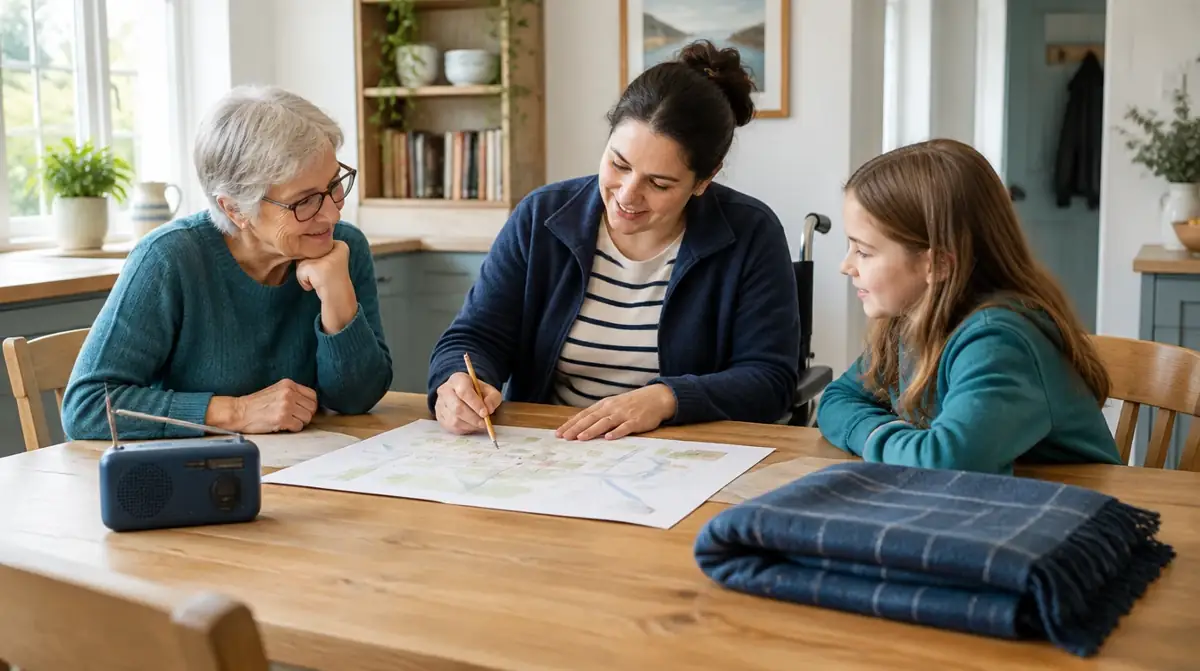
The awkward part of an outage may be the unanswered call. Before anyone needs help, agree who will check in, what to do if contact fails and which decisions need a provider’s advice.
Here, “family” includes the people you share a home with and the trusted people involved in your arrangements. You can use the same questions if you live alone, share with friends or support a relative elsewhere.
Start with the people, not the group chat.
A group chat is useful while the service works. A household plan should also cover the moment it does not. Ready Scotland recommends recording important contacts, support needs and agreed meeting places, with a paper copy people can find.
Ask each person what help they would want, who they trust and what they could manage themselves. Don’t assume a relative wants a visit, can use stairs, can read a small printout or will have a phone to hand.
Choose a format everyone involved can use: clear print, large text or another accessible version. Keep private information secure and share only what the people carrying out the plan need to know.
Agree what happens if the first call fails.
Ofcom explains that power and severe weather can affect phone and broadband services. A charged phone is helpful, but it does not guarantee coverage. If there is signal and calls fail, an ordinary text may still get through; it is not guaranteed.
Choose the first contact.
Who checks on who, and how? Make sure the person has agreed to the role and knows where to find the contact details.
Choose the backup arrangement.
What will you do if calls or messages do not connect? A trusted local person may be better placed to check in, if it is safe and they have agreed. Do not turn a failed call into an automatic instruction to travel through hazardous conditions.
Choose a safe place and an alternative.
Agree accessible meeting places for situations where you cannot get home or make contact. Check opening hours, routes and access needs. Never travel to a pre-agreed place if current official instructions make it unsafe.
A battery radio can help you receive official updates; it cannot tell your family you are safe. Keep receiving information and making two-way contact as separate jobs in the plan.
If someone depends on a digital landline or telecare, ask the provider how it works during a power cut and what support or backup applies. Don’t assume a new messaging app, radio system or satellite feature will work on every device or in every location.
One household, worked through.
The people and arrangements below are fictional. They illustrate planning questions, not a universal response to an emergency.
Two adults, a child and a relative nearby
One adult normally handles school collection. The other usually calls a relative who lives alone. Their plan is incomplete if both routines depend on that person answering a mobile.
| Assumption | Question to settle | What to record |
|---|---|---|
| “I’ll collect them.” | Who is authorised if you cannot get there? | The school’s current arrangements and agreed contact. |
| “I’ll ring Mum.” | What if the phone does not connect? | A consent-based backup check-in. |
| “We’ll meet at home.” | What if you cannot return safely? | An accessible place and alternative. |
| “The numbers are saved.” | Who can find them without the phone? | A paper card, kept securely and within reach. |
The outcome is a short set of agreements. It does not need to become a complicated command structure. An arrangement that nobody has confirmed is still a question to resolve.
Plan around routines that cannot simply pause.
Children and childcare. Check the school or childcare provider’s emergency procedures, collection arrangements and contact details. Explain your household plan calmly, in language the child understands. Help them learn their address and when to ask for help.
Care and powered equipment. Ask the relevant care, equipment and utility providers to help with individual backup arrangements. A general family plan cannot determine safe medical-device runtime or replace professional advice.
Animals. Decide who can help with feeding, transport or temporary care if the usual person is unavailable. Keep any necessary details with your household plan rather than relying on one person remembering them.
People living alone. Agree the check-in and its limits together. A trusted neighbour may be part of it, but only with everyone’s agreement. Follow official instructions during an incident, including evacuation advice.
Your paper contact card
Print this guide and fill in the blanks by hand. Keep the finished card private. Do not put access codes, passwords or unnecessary medical details on a card that could be lost.
- Main household contact
- Name / number:
- Backup contact
- Name / number:
- Agreed check-in
- Who / how / backup:
- Meeting place
- Place / accessible alternative:
- Provider or school contact
- Organisation / number:
- Where the full plan is kept
- Agreed location:
- Review date
- Next check:
In immediate danger, call 999. For power-cut reporting contacts and practical outage steps, use the power-cut guide.
Have the conversation while it’s an ordinary day.
Ask someone else to find the plan and explain the next step. Check whether the writing is readable and the contacts still agree. Talk through a failed call without creating a real outage or leaving anyone without support.
Revisit the plan after a move or a change in school, care, equipment or household circumstances. Mark the version you are using so an old card does not quietly become the family’s only copy.
Then connect the plan to the supplies: read the 72-hour emergency kit guide and check who can find and use what you have.
Have you agreed the essentials?
0 of 5 checkedUse this as a starting check. Your ticks stay on this page and reset when you reload.
Sources & further reading
Practical advice checked against these sources on 5 November 2026. Follow current official instructions for an incident in your area.
- Ready Scotland: household plans, meeting places and support needs
- Government Be Ready: planning with your household
- Ofcom: staying connected and provider support
UKPrepKit is an independent publisher. The government’s Be Ready campaign and the organisations linked here do not endorse this guide.
UKPrepKit · Built by Circle37 — circle37.co.uk